

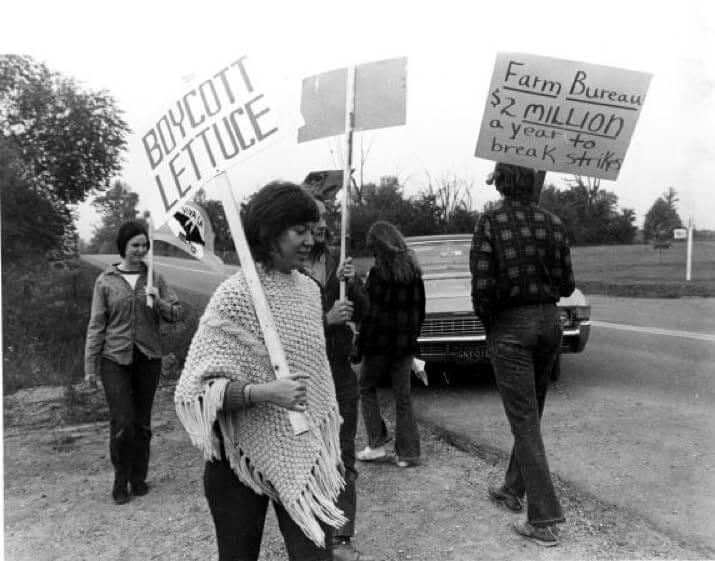
When I entered high school around the year 2000, a relatively new holiday started appearing on the calendar: Cesar Chavez Day.
Growing up in a farming community, with a father who worked as a farm laborer, it felt meaningful. In school, we were taught that Chavez was a civil rights leader who co-founded the United Farm Workers and fought for fair wages, safer working conditions and dignity through nonviolent action. He was often compared to Martin Luther King Jr., a figure of advocacy and change.
As a teenager, I understood it more simply. It meant a day off from school.
As I got older, something began to feel off.
Cesar Chavez Day, now recognized in California and observed by many government agencies, often means closed offices and paused public services. The DMV closes. Courts close. Many local agencies close.
But the fields do not.
Farmworkers are still working on March 31. Planting schedules do not stop. Irrigation cycles do not pause. Agriculture moves forward, regardless of the calendar.
The people the holiday is meant to honor are, in many cases, still in the fields.
Meanwhile, many of those observing the holiday do so from outside that world, often with a paid day off.
That disconnect is hard to ignore.
This is not a criticism of government workers. It is a question about how we choose to recognize the people we say we value.
If the goal is to honor farmworkers, what does that look like in practice? Is it a closed office, or is it something more tangible? Better access to services? Stronger protections? Real improvements to working conditions?
The same thought comes to mind with other modern holidays.
Juneteenth, now a federal holiday, commemorates the end of slavery in the United States. It marks a profound and important moment in history.
But again, the way it is observed can feel uneven.
Government offices close. Banks close. Many institutions pause operations. Yet large portions of the workforce, particularly in service industries, continue working. Grocery stores remain open. Gas stations operate. Restaurants serve customers.
The holiday exists, but not everyone experiences it equally.
None of this diminishes the importance of the history being recognized. These are significant moments that deserve acknowledgment.
But it raises a question worth asking.
If a holiday is meant to honor someone’s work, it is worth asking why are they the ones still working?
Excellent question!